Philosophy and Approach
The Sense of Place Story Method
When people recognize their own relationship to a place—through memory, experience, and reflection, something shifts—connection becomes personal rather than abstract.
And that kind of connection is what sustains both people and places over time.
Finding personal stories of connection to place inspires caring for places.
That truth is the foundation behind everything I do. It’s a truth I've witnessed across two decades of work with parks, museums, communities, and with individuals nationwide.
This work helps people find their stories of connection.
How do we find, as poet Mary Oliver wrote, "our place in the family of things?" Especially if we aren’t from where we live, or don't yet feel at home there.
How do we find a sense of belonging then?
How does that connection form in our busy mobile lives?
And how do we help others discover it?
The Sense of Place and Story Method
"If you don't know where you are, you don't know who you are." — Wendell Berry
Over time, these questions about forming place connections led me to a process I’ve now used with interpreters, writers, and communities across the country.
I call it the Sense of Place and Story Method.
It is a way of moving from awareness to belonging, using story as the bridge between lived experience and shared meaning. It follows the same arc no matter what kind of program or experience I am facilitating:
Connection → Meaning → Story → Engagement → Belonging
It reflects the way people actually come to know and care about places, which includes a journey through memory, experience, information, reflection and integration.
How This Work Unfolds
People come to this work from different disciplines.
For some, it’s about crafting narratives or experiences that awaken connection and caring, and inspire action.
For others, it’s about reconnecting with themselves and their surroundings, and finding more meaning and creativity in their lives.
Gaining a sense of place
I think of a sense of place as an ongoing meaning-making process—one that evolves over time. Your sense of place takes shape at the intersection of your knowledge about a place, and your experience of that place. Where knowledge and experience intersect, meaning starts to form. You might ask, “What does this place mean to me?” What do I know? What do I feel? What matters about this place for me? “
Finding sense of place stories
From that process of inquiry, integration, and meaning making— your sense of place starts to form. And from their, your sense of place stories emerge. This takes you from place knowledge to place relationship.
When that shift happens—from information to connection—it changes how we understand where we are and who we are. It changes what we feel called to express, create, and share. And it changes how we relate to the places around us.
A place relationship is a living exchange between self, place, memory, and meaning.
Through that exchange, a sense of place, belonging, and well-being take shape over time.
You come to know the place. You learn, experience, and pay attention to what you find. You listen to what it reveals, and you keep learning—about its natural, cultural, and human stories. You begin to see it from different perspectives, and to recognize the layers of story it holds, including your own.
Just as in any relationship, getting to know a place—really getting to know it—reveals who you are too, through what you notice, feel, and experience —and the meaning behind those experiences and connections.
In this way, a place is no longer just something you learn about. It’s a relationship that affects you and your choices.
Navigating the Journey
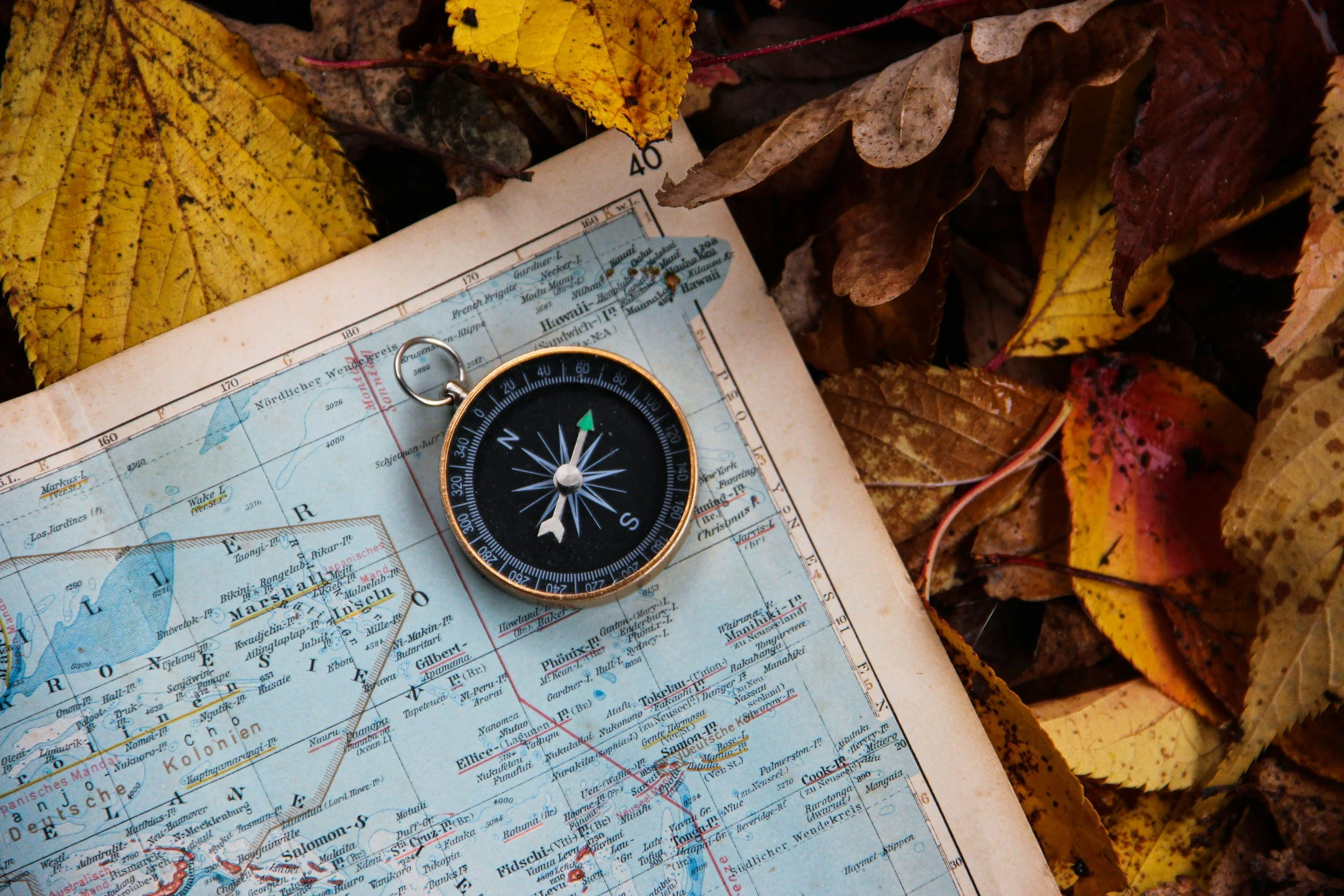
The Sense of Place and Story Compass
To stay oriented through this process, I created a compass model that offers four core areas of exploration. This tool helps guide you as you navigate the process. No matter what kind of program you’re doing, I’ll offer a sequence of experiences to help you go through the steps of discovery, integration, and skill-building with intention and clarity.
Knowledge of Self
Discovering personal stories, connections, and insights
Knowledge of Place
Learning to see different layers of time, story, and perspective
Craft of Story & Meaning-Making
Using reflection, integration, and stories sourced from information and meaning
Craft of Engagement
Using techniques, tools, and practices for connection and impact
Using this Approach
Working with the Sense of Place and Story Method shifts both how you work and how you think about what you create.
Whether you want to design visitor programs, lead community initiatives, or develop a creative project, this work offers tools and practices to help you move forward.
For interpreters, it leads to programs that move beyond information into experiences visitors remember.
For writers and creatives, it opens stories rooted in meaning and lived connection.
For communities and organizations, it strengthens identity, belonging, and stewardship.
This is not just a way of telling stories. It is a way of helping people find their place in the story.
What’s Possible?
Interpretive Professionals
Design programs that move beyond information delivery into meaning-making experiences visitors remember.
Explore Trainings →
Community Organizations
Offer experiences that strengthen collective identity and inspire stewardship.
Explore Community Engagement →
Writers & Creatives
Discover stories that resonate because they are rooted in place and meaning.
Explore Programs Offered →
Tourism & Heritage Organizations
Create experiences that bring a true sense of place to life.
Explore Keynotes →
If you’d like to explore how this could work for you, your community, or your team, I’d love to hear what resonates and see what’s possible
How This Work Emerged
This work first began while I was traveling as a full-time touring songwriter. I would return to places I loved, only to find them dramatically changed. I wanted to do something if I could, to help slow that trend.
It wasn’t because people weren’t connected. At concerts, when I sang about my own relationships with places, people would come up afterward and share their stories—about places they’d loved and lost, and places they’d loved and saved.
I saw how powerful remembering sense of place stories could be for inspiring connection, caring, and belonging.
That realization led me to create workshops for communities and nonprofits, where people uncovered their own stories of place. Participants consistently left feeling more connected—to themselves, their surroundings, and one another.
These early workshops grew into the programs I now offer as interpretive training for parks, museums, and historic sites, and into programs for writers, creatives, and communities. They became my Sense of Place Story Method and my Sense of Place and the Art of Interpretation training, which I offer at sites across the country today.